


Which wood to choose for an outdoor deck?
The best wood for a terrace is not the same for all projects. The choice depends on exposure, the structure design, the desired appearance and the maintenance you are willing to perform.
Before comparing the shades of the boards, you must therefore examine the conditions in which the terrace will be used.
1. Take exposure into account
A covered terrace and a terrace exposed to the weather do not face the same conditions. The material's resistance must match the intended use, according to its natural durability or the treatment it has received.
2. Compare species and materials
Softwoods, certain hardwoods or modified wood offer different possibilities. Shade, grain, surface finish and maintenance should be examined together. The name of a species alone is not enough to guarantee that the boards are suitable for external use.
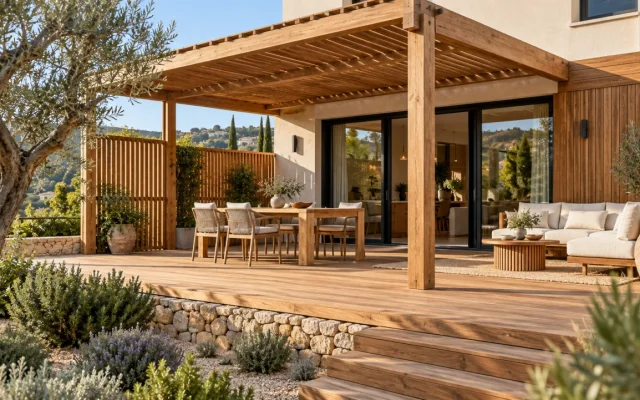
A wooden terrace extends the house towards the garden.
3. Observe samples
Ask to see samples and find out how their appearance evolves outdoors. The appearance of a new board is not necessarily that of the terrace after several seasons.
4. Care for the structure
A terrace is not limited to its visible surface. The structure, water drainage and ventilation contribute to its durability: a suitable structure helps the wood dry after rain in particular.
5. Respect spacing
The spacing between elements is defined according to the products and laying conditions. This is why a project must be studied as a whole, from the base to the finishes.
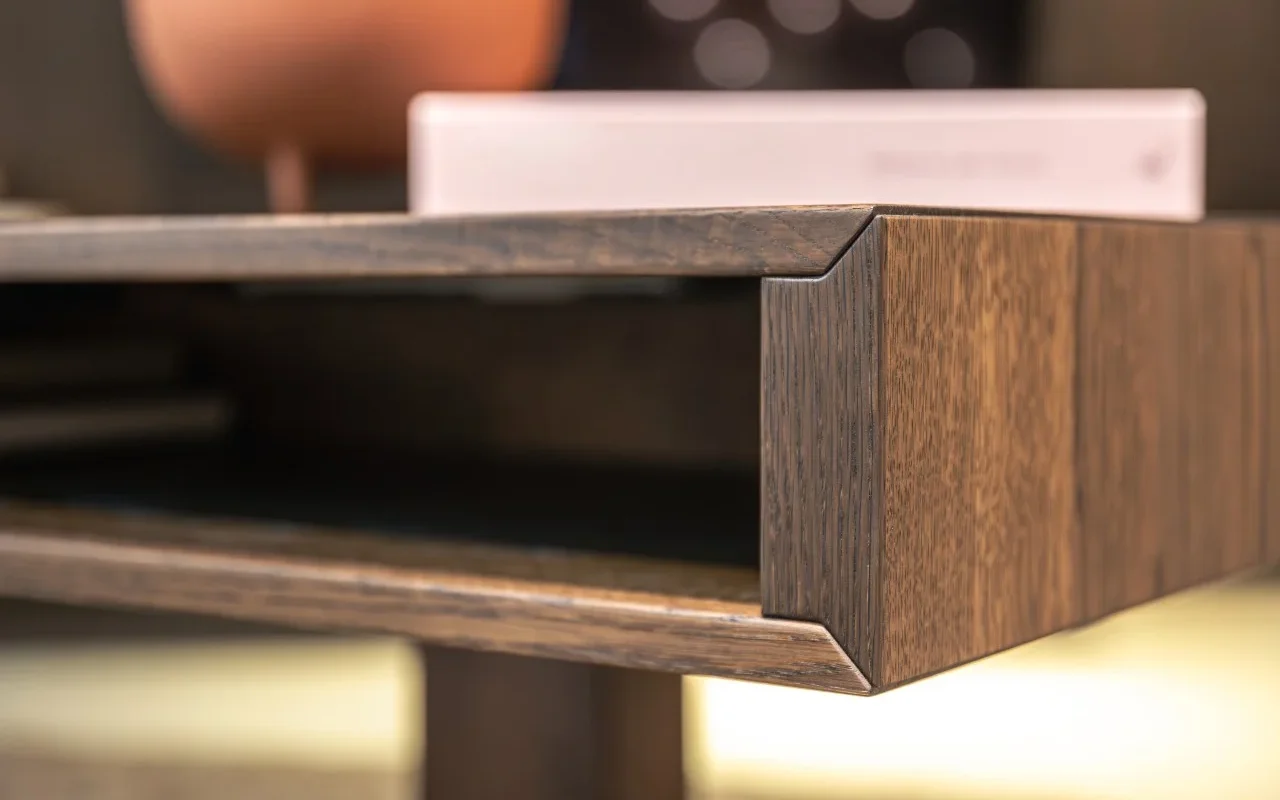
The choice of boards and their finish is made according to the exposure.
Does a greying terrace mean it is damaged?
Greying is a natural evolution of the wood surface exposed to light and weather. This colour change does not in itself mean that the wood loses its strength. You can appreciate this patina or prefer a shade close to the original: the finish is then chosen with the professional.
What maintenance should be planned?
Maintenance depends on the material, its exposure and the finish chosen. Regular cleaning removes dirt that accumulates on the surface.
Before applying a product
A few precautions to take:
- Check its compatibility with the boards
- Follow the manufacturer's recommendations
- Test on a small area
- Do not rely on a product to compensate for poor water drainage
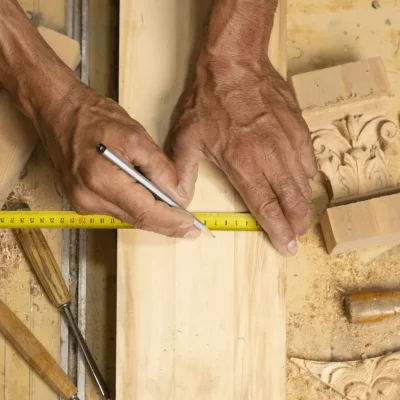
Each terrace is designed according to the terrain, access and use.
Three uses, three designs
Dining area
A large enough surface for the table and chairs, with easy access from the kitchen.
Relaxation space
A layout that takes advantage of sun or shade depending on the time of day.
Link with the garden
Levels and steps designed to circulate naturally between the house and the outside.

Cutting and adjusting elements during installation.
Information to provide
To prepare your terrace project, remember to gather:
- Photos of the terrain and its access
- The planned surface area
- Sun and rain exposure
- Your aesthetic preferences
A durable terrace is as much about its design as the choice of its boards.
A terrace designed for its environment
Pergola to structure the space, cladding or fence to beautify the garden: the terrace can be integrated into a broader outdoor design.
Materials and finishes are then chosen to form a coherent whole.
Wooden terrace and pergola, for an outdoor space where it's good to live.
Prepare your terrace project
Send us photos of the terrain, the planned surface area and your ideas.
We study with you the possible materials and layout.